→Wondering what your options are?
Explore your options
There are lots of routes you can take after 16. Here's a plain guide to the main qualifications — what they are, who they suit, and which organisations near you offer them.
A Levels
A Levels are two-year academic qualifications, usually taken in three or four subjects. They are the traditional route to university and keep your options broad. Best suited to students who enjoy academic study and exams.
Learn more →Apprenticeships
Apprenticeships are designed for people who want to start building a career straight after their GCSEs. You’ll work for an employer, earn a salary and study towards nationally recognised qualifications while gaining valuable real-world experience. Depending on the apprenticeship level and industry, you could achieve qualifications such as vocational certificates, diplomas, NVQs and apprenticeship standards. They offer a direct route into employment while continuing your education and developing skills that employers value.
Learn more →BTEC Diplomas
BTEC Diplomas are vocational qualifications that blend coursework and practical projects in a chosen subject area. Available at different levels and sizes, they can sit alongside or instead of A Levels and lead to university, apprenticeships or work. Suited to students who prefer continuous assessment to final exams.
Learn more →T Levels
T Levels are two-year technical qualifications taken after GCSEs, broadly equivalent to three A Levels. They combine classroom learning with a substantial industry placement of at least 45 days, so you build real workplace skills. Ideal if you have a clear career area in mind and want a mix of study and hands-on experience.
Learn more →Vocational Technical Qualifications (VTQs)
Vocational Technical Qualifications (VTQs) are practical, career-focused courses that develop skills for specific industries. They come in a range of sizes and levels and can lead to employment, an apprenticeship or higher education. A good route if you prefer applied learning to written exams.
Learn more →Cambridge Nationals
Cambridge Nationals are vocational qualifications usually taken at Level 1/2, mixing practical tasks with some exams. They build sector-specific knowledge and transferable skills, and can progress to further study such as A Levels or technical courses.
Learn more →Cambridge Technicals
Cambridge Technicals are Level 3 vocational qualifications designed with employers for students aged 16 and over. They focus on practical, industry-relevant skills and can lead to university, apprenticeships or employment — a strong alternative or complement to A Levels.
Learn more →Supported Internships
Supported internships are structured study programmes for young people aged 16–24 who have an Education, Health and Care (EHC) plan. Based mainly with an employer and supported by a job coach, they help you build skills and confidence and move towards paid employment.
Learn more →Volunteering
Volunteering is a great way to gain experience after your GCSEs while supporting a cause or organisation you care about. Although volunteering does not always lead to a formal qualification, some programmes include training or accredited awards. It can help build confidence, develop communication and teamwork skills, strengthen future applications and provide valuable insight into different careers and industries.
Learn more →Degree
Learn more →V Levels
V Levels are a new type of Level 3 vocational qualification. Teaching starts in September 2027 in the first three subject areas: Digital, Education and Early Years, and Finance and Accounting, with more following each year to 2030. They are designed to sit alongside A Levels and T Levels and will replace many BTECs. If you are in Year 11 now, you would be in the first group of students able to take one.
Learn more →NCFE
NCFE is an awarding organisation behind a wide range of vocational qualifications, including the CACHE qualifications that are well known in childcare and early years. Its courses run from Level 1 up to Level 3 through colleges and training providers, and are strongest in health and social care, childcare, early years and youth work. Because the levels build on each other, you can start where you are and step up a level at a time rather than committing to a full Level 3 course straight away.
Learn more →WJEC Applied Diplomas
WJEC Applied Diplomas are Level 3 applied general qualifications, best known for Criminology. They are assessed through a mix of coursework and exams rather than exams alone, roughly half and half, and they cover subjects most schools do not offer at A Level. They are graded A*–E, carry UCAS points, and are usually taken alongside A Levels by students heading for university.
Learn more →BTEC Nationals (AAQs)
BTEC Nationals (AAQs) are the Level 3 BTECs introduced from September 2025. AAQ stands for Alternative Academic Qualification, and to be approved as one a course has to support entry to higher education. Subjects include applied science, engineering, computing, IT, medical science, early childhood development and construction. They are taught through applied, coursework-led study and are designed to sit alongside A Levels rather than replace them.
Learn more →→Get help finding your pathway
Unsure? We’ll help
We can help you find a future based on your interests and how you like to work. It’s easy and only takes a couple of minutes.

→Fancy attending?
Grab a free ticket
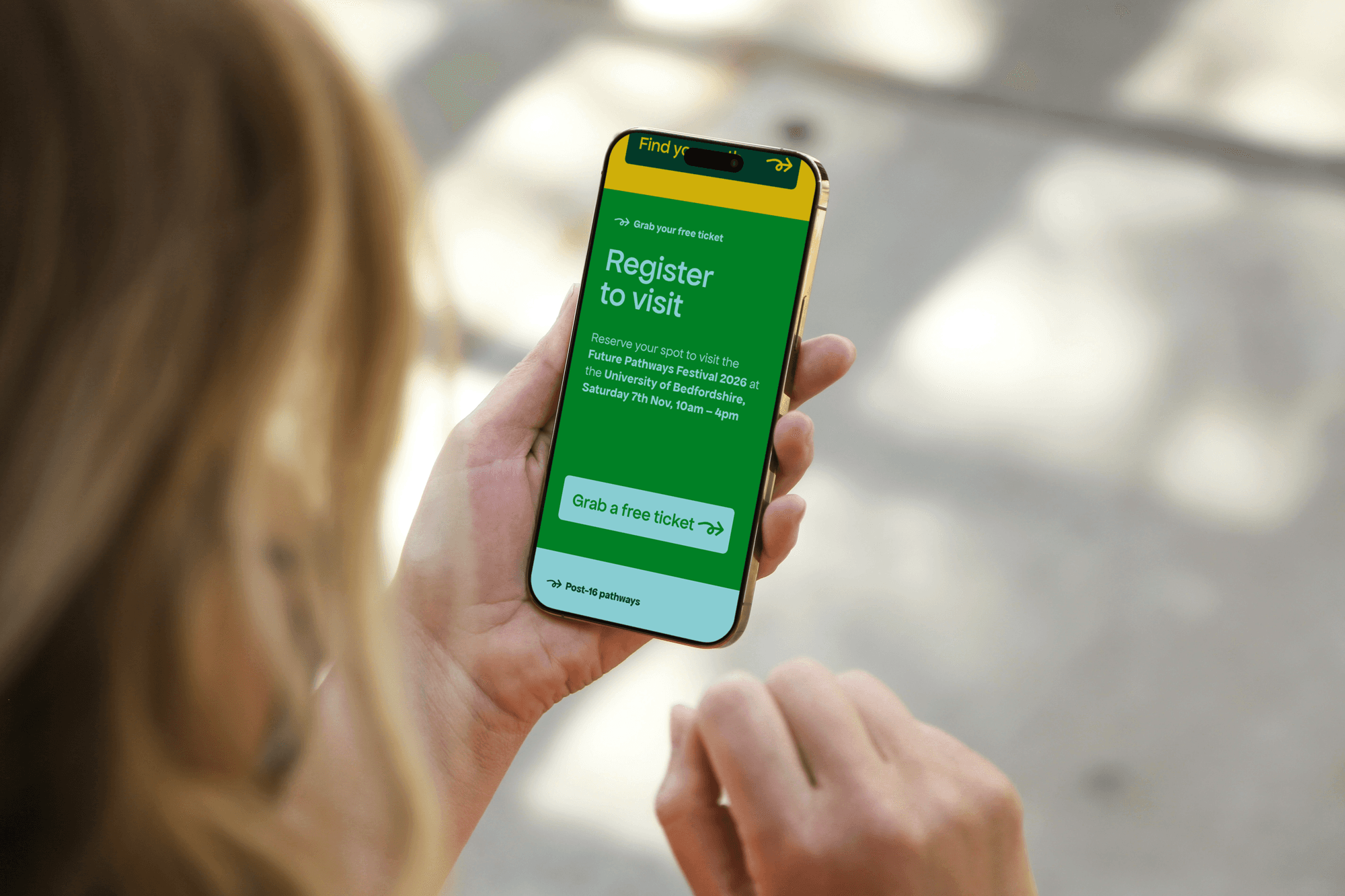
Reserve your spot to visit Future Pathways 2026 at University of Bedfordshire, Bedford Campus — Saturday 7 November 2026, 10am – 4pm.